Friday, March 6, 2020

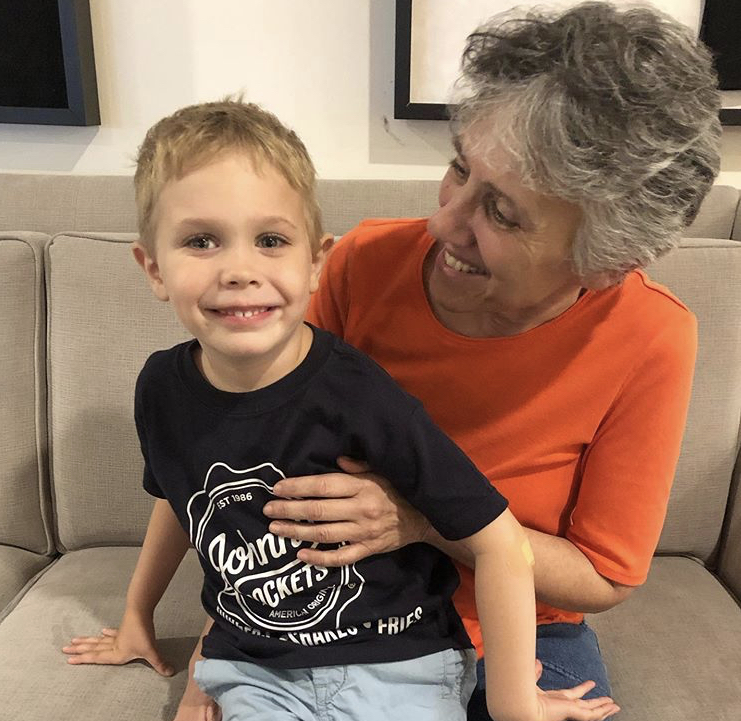
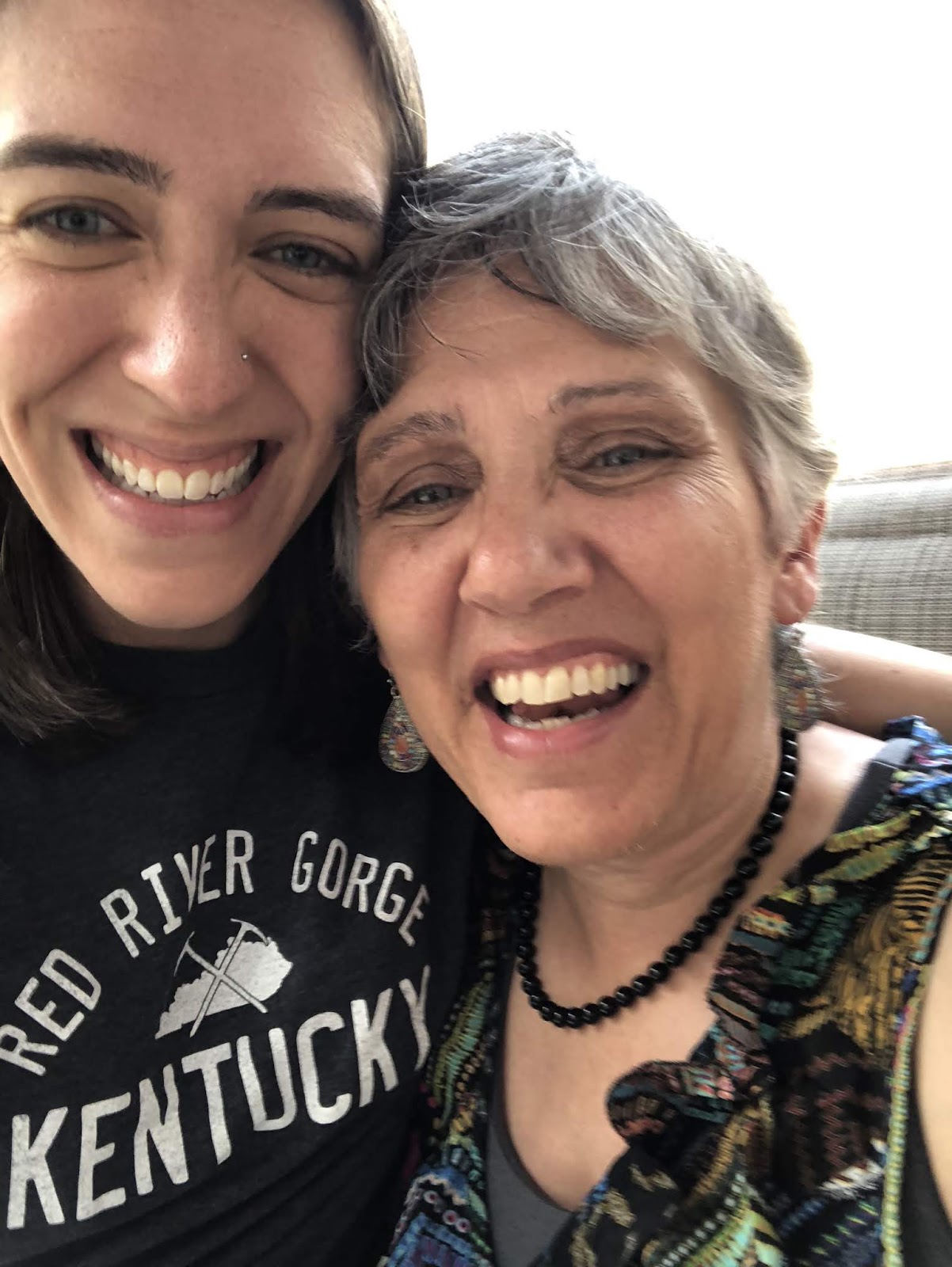
Happy birthday, Mom!


Today is my Mom’s sixty-second birthday.

In this past year with a newborn, I’ve been remembering, thinking of, and channeling my Mom through lullabies. A new song I discovered is called ‘mantra nocturna’ – sung in an Elizabeth Mitchell album. The lyrics are:

I will be your home
I will be your guide
I will be your friend
Always at your side

Sleep now in your room
Quiet of the night
Surrounded by the moon
Till you see the light.

The lyrics are modest and clear; sung over and over in Spanish and English. As I sing the over Andrea, I realize that this is what I miss most about my Mom – how she is home to me. How as I raise my children and think of how she raises me, I realize that what I hope most for is to instill within my children a strong sense of home that is bound up in our love for one another and our love for community. My hope is that home for Asher, Moss, and Andrea feels synonymous with a bond to who Charlie and I are as their parents. My prayer is that lessons we teach them, experiences we share, culture we build up together, and personalities of each of us, become interwoven throughout their childhood so deeply that they can carry it with them throughout their lives.

And then, last October another lullaby snuck back into my repertoire. It was a crisp autumn morning and Moss had stayed home sick. Andrea was sleeping in her bassinet as Moss lay curled up in bed, looking diminished and weary. I sat there, exhausted myself from a sleepless night, trying to dig deep to find energy to comfort him. I toggled through a playlist, thinking that some gentle songs, familiar songs might bolster his spirits. I landed on a random Raffi mix and then nestled in next to Moss, wrapping him in a warmth and gently stroking his sweet head.

All of a sudden, ’The Garden Song’ started playing; it instantly grabbed my attention, as my Mom used to play a John Denver version on her guitar, but I hadn’t heard the song in over a decade. In that moment – a memory flooded my senses, and I could immediately feel myself sitting within the memory. I was a little girl, seated next to my Mom as her fingers danced across the frets and she sang the simple melody. I saw her – in the glow of her youth, strong arms and a steadfast smile, looking down on me. The return to this moment felt peaceful and sacred, and I sat there – holding Moss close as tears streamed down my check, feeling her presence suddenly deep within my tired bones – and knowing that even though she wasn’t physically present to help me as a young mother, that her love and spirit was imbued so deeply into my being.


I also sat and thought of the lyrics of the song; while my Mom never had much time for gardening, besides planting an occasional tomato plant and seasonal annual planters in the yard, I listened to the words and thought of her life’s work. I thought of how she had planted seeds in mine and my brother’s life, in the lives of her friends, and especially in the lives of her students. I thought of the rich and fertile ground – as so many that she has nurtured are now raising their own children and volunteering to work with other youth. I’ve imprinted the lyrics in my heart and mind, and now sing them over my family daily as I think about my Mom’s legacy – and about how our most important work is in the small, daily tending to that calling.

Beyond these songs, and the memories that have been bound up in them, I’ve been thinking so often of my Mom and our relationship now that I am raising my own daughter. A few weeks ago Andrea and I ventured out West for a long weekend, to go hiking in Joshua Tree with my best friend. My whole experience was permeated with my Mom’s presence, as I felt like I was walking in her footsteps – echoing how she and her best friend had taken me out West at a similarly young age.

In a recent podcast episode, Jad Abumrad beautifully described how some memories have a sense of rhyme – of taking you back to another place. So often these past months, as I grow into a relationship with Andrea, and continue on my journey as a young Mom, I find myself standing in the middle of rhyming memories – memories of songs and experience that have bound me back to my own Mom. As I think of her today and celebrate her birth, her fierce laugh, her adventurous spirit, her stubborn determination, and her sacrificial love, I am grateful for formative moments. I am grateful for the glimmer of early memories from when I was a young child and she was a new mom, and for how those memories can rhyme and reverberate throughout the lives of my children, Barb’s grandchildren.


Monday, September 16, 2019

Alzheimer’s Walk Reflections: How to Care for Your Caregiver


Much of my reflections about ‘why we walk’ have shifted in recent years. As Mom has lost her language, I’ve been reflecting more on my experience with the disease as Mom is no longer able to vocalize things from her perspective. This is hard and challenging, but also an accurate depiction of the late stages of the disease. As Mom’s memories and capabilities fade away – she is losing her ability to be present, and as a result it feels like many of the challenges – the logistics of managing her care, the hard choices, and the grief of incremental loss, are felt much more acutely by myself, my immediate family, and Mom’s close friends.

As a result, I think the voice and needs of Alzheimer’s caregivers are integral to this disease – and I wanted to take a few moments to share tips for how to care for your friends that are Alzheimer’s caregivers. 

Tips for Caring for Your Caregiver:

    1. Ask how the person is doing, and be ready to listen.
This is probably the biggest thing you can do for anyone who is caring for someone with a chronic illness. I know it’s always awkward when a friend is caring for someone who is terminally ill to know how to bring it up – do you mention it/ask? (What if they don’t want to talk about it? What if they do?)

In my experience, caregiving is at the center of my headspace – and a key element of every day. (This applies even now, when I am living away from Mom.) It is constantly on my mind, and so I am never upset when people ask; I am always grateful that people recognize that this is an important part of my life – and it has become a huge part of my identity.

What I would recommend is that you let the person who is caregiving lead on how much they want to share. Some days I really want to talk about and process whatever is on my mind at that moment. In other instances, I don’t have the energy or mental space to open up and so I offer shorter/more curt responses. (And my hope is that friends know that shorter/more summarized responses are not meant to indicate I am ungrateful for being asked, but often just mean that I don’t have the ability to be as vulnerable or decompress in that moment.)

My other piece of advice, (and this applies whether or not the person chooses to open up) would be to Comfort In, Dump Out. There is a complete and helpful article on this here – but the main premise is that, for the person in crises you split their social network into circles of who they are closest to. (The center circle would be a spouse, best friend, immediate family members; next ring out would be close family and friends, further out would be acquaintances, etc).


The basic tenet then is that the person in the center ring can say anything she wants to anyone, anywhere. Everyone else can also say these things, but only to the people in the outer rings. This allows the grieving person/person closest to the crisis to not be put in a place where it feels like they need to do the emotional work of carrying the burden for someone else, when they are already so focused on the immediate needs of the person they are caring for (as well as their own grief and/or trauma).

As soon as I saw this article – I saw this to be spot on. Often the best way to help someone who is caregiving is simply to listen. When you feel at a loss for what to say “I’m sorry” and” “that sucks/is so crappy” are honestly often the most helpful replies. Even if they don’t feel complete or full enough as a response that you would like to give, know that you are giving a gift in offering a listening ear – and in being willing to sit with the discomfort of watching your loved one struggle without running away or being defeated by the helplessness.

One last point that I’d offer specific to Alzheimer’s – many people are very familiar with the disease and often want to offer anecdotal stories to connect. I have heard countless times “my grandparent had this, so I know how awful it is…” etc etc. While that statement is a helpful way of indicating that you are grieving alongside the person, I’d share that I’ve also heard people say “my grandparent had Alzheimers, so I know what you’re going through.” While I know that the person means well, that statement often stings – while there is some shared understanding is knowing the symptoms of the disease, I feel jarred and frustrated by the stated assumption that another person who is not a primary caregiver can relate fully to my experience. I am not trying to invalidate the immense pan or shared grief - but only seek to highlight that I struggle to relate when this is said by someone who isn't a primary caregiver, as watching someone battle Alzheimer’s through the lens of occasional visits feels different than being the child/spouse that is the primary caregiver for someone who is suffering. To me, I have also felt a gap in the loss my Mom experiences as someone who got sick at 54, versus people who are diagnosed in their 70’s or 80’s – both experiences are awful and wretched, but there are vast differences. It should not be a matter of comparison, and I don't seek to make it such (as grief and pain are hard, no matter what). But when I hear them aligned/compared in the same breath it can feel painful – and thus in general I’d recommend avoiding seeking to compare to an experience to acknowledge the suffering.

    2. Be present and offer specific ways to help.
When you know that someone is going through a tough time – the best thing you can do is offer specific ways you can help. “Let me know how I can help,” while well-intentioned – puts the onus on the person caring for someone who is sick to come up with and articulate, what they need. While this offer is generous in the willingness to do whatever is asked, if the caregiver is in a season of providing care where they are over-taxed, exhausted, and stressed, it is often a lot of work to even find time and think through what would be helpful to then. Additionally, there’s an added pressure for them to be vulnerable in having to reach out, articulate, and ask for the specific type of help they need – at risk of having someone say that they are too busy or unable to offer it once a specific type of help is articulated. 

The best thing you can do is offer specific things to the person in front of you. Examples include:
“Can I bring you a meal next week?” (“Can I organize a meal train?”)
“Can I babysit your kids for a few hours so that you and your partner can get some time away?”
"Can I come over and hang out with your Mom so that you can get some time to yourself (or go get XYZ task completed)?"

Our family and friends have done a million different versions of this – driving from hours away to come offer support – coming up for a simple visit in which they take me out so I can cry into my beer with them, offering to paint my home with me/help me move, driving up to join us in the Alzheimer’s walk, etc. My family has been an incredible example of this – when I lived in Kentucky my aunt had my Mom and brother over for dinner once a week so that Charlie and I had a dependable night in which we had a break. (This was HUGE for us.) Our caregiver/very dear friend/framily Selena was unendingly generous – offering to go out of her way to run an errand that I might mention I needed to tackle, unexpectedly offering to keep my boys an hour or two longer so I could get away with Charlie, brightening our home with flowers or bringing over a surprise  breakfast/dinner dish. And in windows when my brother got sick (on top of caring for my Mom) – friends of my Aunt, my Mom’s friends and my church family brought meals to help us pull through, so we could cope with other immediate challenges at hand.

 These tangible, specific offers of help were our lifeline.

     3.   Give the person grace when the small, daily things slip.

This point is much subtler, but just as important. One of the most felt elements of the past five years is that I didn’t have enough time, didn’t have enough energy. I have felt so stretched over a long period of time, and as a result much of my ability to focus and stay on top of daily tasks has suffered. 

Over the past five years, I’ve become somewhat rude and thoughtless by necessity at times. There are hundreds, (maybe even a thousand?) unwritten thank you notes for all the small, generous kindnesses I’ve been shown. Prior to my Mom’s illness I was a very intentional friend – one that would call and check in, keep up with so many people in my network – send messages, remember birthdays. So many of these small habits have faded away.

And beyond the upkeep of friendships and social cordialities – I have missed deadlines – dates where I’ve needed to submit paperwork for insurance for my Mom, forms for my boys’ pre-school. I’ve forgotten to communicate with our family caregiver about pick-up or drop-off times. Now that I’ve moved, I’ve been behind the curve on letting people know when I’m coming to visit and scheduling appointments. In these instances, almost every time, when I’ve explained the situation I’ve found so many people have been willing to extend grace – to forgive my oversight and spaciness, to understand my absentmindedness (or lack of presence as a friend). This has been such a huge and important element to getting through the past seven years, as it’s allowed me not to beat myself up for feeling behind the curve – and it’s allowed me to stay connected in friendships even when I don’t reciprocate as much as I would like. It is a gift, and one that I am so grateful for.

    4.  Stay the course/stick with your person.
My last piece of advice would be to stick with your person – especially if they are caring for someone with a chronic illness that will span the course of years (and maybe a decade or more). One thing I hear from many Alzheimer’s caregivers (and feel myself) – is how Alzheimer’s care feels different than some other serious, fatal illnesses. When someone is diagnosed with cancer or a terminal illness – many times the recognition of need for care is immediate and folks rise to the occasion that is absent for those caring for someone with a mental illness, or with something that is degenerative over a longer window. 

I would just say that if you are close to an Alzheimer's caregiver  – that you make a point to check in at random. Consider putting reminders in your phone a few months out to check in with them – or send a meal or card, at random. Let the person know you are thinking of them – send a book, or a poem, or a starbucks gift card, when they least expect it. Lift up a prayer or meditation on their behalf on a regular basis, and send a quick email or text letting them know that they've been on your mind. (Even if they don't respond, as per point #3, know that it will be appreciated!)  As this Op-Ed articulates – seek to ‘be a builder’ and to be there for the long haul. The consistency of your presence will be a gift of acknowledgement that the journey is long and a recognition of the potency of grief and it's potential to grate and hollow out when it's present in such a long and arduous battle. In return – seek to provide comfort and respite for your person in small, incremental ways throughout the length of their battle with the disease.

To sign up to walk or donate to our team, click herehttps://act.alz.org/site/TR?pg=personal&px=6905271&fr_id=12589


Friday, September 6, 2019

Alzheimer's Walk Reflections: On my year as a long-distance caregiver


The phone always rings between 10am and 2pm, during standard business hours when I am sitting, exposed, in my cubicle at work. I stare down at the number on my phone and recognize it. I’ve managed to memorize the number, but have refused to actually save it in my phone contacts because it’s permanence and presence looms over me enough. Subconsciously, I suppose, I don’t want the Memory Care number to have an established place in my daily life – or at least don’t want to give them the thirty extra seconds of my day it would take to save down the contact information in my phone.

“The phone number is burnt into my memory, that’s space enough!” I think, as I quickly reach over and answer the call.

These calls from Mom’s assisted living facility, and how they are an unexpectedly expectant part of a quotidian workday, are the best encapsulation of what the past year of transition has been like. In the fall of 2018, almost immediately after last year’s Alzheimer’s Walk, my boys, Charlie, and I packed up our lives and moved to Washington DC. I’d applied for a new position within my organization, one that put me back on the trajectory of international work that I was most interested in. When I was offered the role I was told I would need to relocate to DC. Charlie and I took stock of where we were and our family’s collective goals, and decided the time was ripe for change.

While we were excited about the change, aspects of the move was difficult and painful; we’d finally built up a rich community in Lexington, even in spite of caregiving demands and time constraints. And I was heartbroken to be away from Mom and the rest of my family, stripped of the flexibility to breeze in and out for a quick visit or two each week. But I took heart in knowing that it was the right move for my husband and children, and that it personally meant more career fulfillment and greater opportunities in the future. I knew that if Mom were well and herself, she would be encouraging me to do it – cheering me on.

{photo from a visit with Mom in Spring 2019}
A remote move, especially with small children, is no small feat. But Charlie and I were pleasantly surprised with how smoothly it went. We had friends on both ends of the move that jumped in to load, drive, and unload the truck. When we landed in DC we were thrilled to find many close friends from across seasons already living in town. Community and routine came relatively naturally.

The adjustment into a role as remote caregiver has been somewhat bumpier, but with a caveat that the logistics and assurance that mom receives excellent care has been seamless. It came as no surprise that my family in Lexington and my Mom’s legion of friends continued to help day-in and day-out. They visited (and still do) faithfully. They call and text with occasional updates, and are always willing to step up and help if issues arise.

The bigger challenge on my end has been trying to juggle how to maintain the headspace and attention to my Mom’s care when I am so distant and managing so much as I adopt to my new life here. The calls (as described above) from her Memory Care unit are always helpful – updating me on a small incident (where Mom might have fallen, or started exhibiting an unseen behavior) or asking me to secure more items of hygiene care. However, in spite of their helpfulness I often feel caught off guard by them. They can come at any point in my workday, and I never know if a call is for a smaller need, like buying a few new items for Mom, or something much bigger – like a fall or health issue that has arisen that requires immediate attention. When the bigger issues come up, it unravels my mind and interrupts my day with an unexpected force. I find myself much more quickly overwhelmed by the tasks that come, and much less steadfast and level-headed than I was in Lexington.

An additional challenge is trying to get a pulse on how Mom is doing. I speak regularly with the nurses, and family and friends who are visiting. While everyone gives me helpful, detailed accounts of what they’ve seen and observed of Mom – so often anecdotes conflict. One friend who hasn’t seem Mom in a while will report about how quickly she’s deteriorating, in the next moment a staff member at Legacy will give me a readout of a great day that she’s had, and a week later I’m speaking with her doctor about a newly emerging, problematic health matter/behavior. What’s most daunting is that no one’s account is untrue or even over-dramatized or incorrect. The nature of Mom’s illness and the rapid progression we’ve observed over the past year often translates to the fact that Mom’s well-being and reality can shift day-to-day, hour to hour, even between moments. It feels daunting to monitor from afar, and I remind myself it would still be nearly as challenging if I were checking in on her myself. But this still doesn’t abate the concern I feel from the distance – from the lack of ability to be there and see firsthand.

{from a visit in fall of 2018}
Lastly, the final challenge has been coping with the grief that I’ve felt since the move. Now that I am no longer in Lexington and caring for Mom in an intensive way, on a daily basis, I’ve had a lot more space to process the loss. In coming up for air after five years of demanding caregiving challenges, I’ve begun facing much of the pain and grief that I previously compartmentalized in order to cope and stay standing when so many people needed so much care from Charlie and I.

Now that I am in DC, I find myself constantly thinking of Mom. I walk to and from work daily, and hardly a day goes by where I don’t feel a pang of sadness -- wishing that I could call up my Mom and chat about everything and nothing as I walk home from work. When I post pictures of my boys to our family’s shared photo album, or catch a funny story I want to share, I daydream of telling my Mom about it – of saving it up for her next visit, or sending a quick text her way. I think of all the questions I might have asked her about her years as an early parent as I nurse my newborn late at night:

Was I a good sleeper? 
  What about Corey? 
   Remind me – what was your labor and delivery like with each of us? 
    Were you ever unsure and afraid? 
     What was your greatest joy in your early days of parenting?

All of these questions filled the vacant spaces of my day in Lexington, but they were far fewer when I was caring for Mom due to lack of time, and due to the fact that I pushed them aside as a means to try and cherish and recognize that my Mom was still with me and still in front of me. The reality of the move and the lack of her daily presence has given me permission to begin to accept her gradual departure – and to sit with these things, often in silence and in loneliness. In a city where much is new and exciting, and where we have many good friends, I didn’t expect for the specter of the past years and my grief to loom so large.

So as we prepare to walk this year, we walk in part for caregivers – for those near, and for those who may be further then we like, battling unanticipated feelings of grief and trying to balance responsiveness for the immediacy of needs with the regular demands of their daily lives. I acknowledge that the distance doesn’t lessen the ferocity of love for your family member, and it doesn’t diminish the passion and intent you put into making sure that your loved one with Alzheimer’s is well cared for.

I am glad that I will have the gift of time to be in my Kentucky home and present – to have my Mom meet her granddaughter, and then to head downtown, yet again, and walk with the hope that our money raised will provide help and comfort to other caregivers – those both near and far from their loved ones.

To sign up to walk or donate to our team, click herehttps://act.alz.org/site/TR?pg=personal&px=6905271&fr_id=12589

{from a visit early this summer}


Friday, August 24, 2018

On transition: Last move question, answered

Today is the last, and most important move question to answer.

Writing and sharing about Alzheimer's this year has been so much more focused on my voice and how I'm doing. I think much of this has been because Mom has a hard time communicating and I struggle to speak about or for her without her ability to process and 'validate' my perceptions.

But today I'll do the best I can to share my thoughts and perceptions on how Mom has handled the move.

What has the transition meant and ‘looked like’ for Mom?

As I mentioned in my last post – it is difficult to articulate or describe how Mom is doing or what her days look like in a clear and straightforward manner. As she has lost language to speak for herself, we are dependent primarily on observing behaviors and emotions, and so much of my ability to understand her story from her own perspective is lost. Additionally – it’s never a simple, single narrative.

To put Mom’s perception of her move in context, I’d actually need to go back to 2016/2017 and oft-held arguments that Mom and I had. Mom went through a phase where she would get very angry at Charlie and I about daily things – if we made supper late, if we went out with friends and left her in the house alone for few hours. In those instances, when I was at my worst and unable to walk away from the argument, things would escalate and Mom would get mad, threatening to move out. (Sometimes she would even start taking pictures off her walls, or storm out of the house and bolt down a neighborhood street, at which point we’d have to chase after her for fear she’d get lost.(!))

This is not the most flattering of snapshots of the past six years, but I share it because the sentiment of Mom’s desire to move out, live independently, or simply do small things to maintain autonomy was a thread that was woven throughout our recent years together. I felt and perceived it acutely, and understood it well. It pissed me off to no end, and yet I also cherished it – as it was so bound to who my Mom is – her fierce independence, desire to take action, hunger to be in control.

The desire to move out emerged from so many different frustrations of her days, sometimes because she felt like we were restricting her independence. On other days (often even at the end of the big fights I described – when we would have a breakthrough, or Mom would have a moment of clarity) Mom would perceive how stressed or how worn out I was, and she would communicate as best she could that she wished she could move to give me space…to lessen the burden we were bearing in caring for her.

And so, when it came time for Mom to move I really strove to frame it as an opportunity for her to
have her own apartment, her own home and space, her own space in which friends could visit and she could come and go to events as she pleased. Although her language was diminished and she struggled to understand, I believe she welcomed the move in this way. There were days as we planned for the move (and even after) where that was how she understood and felt about the change. She spoke of it in an excited way – leading up to and when we first moved there. She relished how beautiful her new apartment was, and took pride, in broken sentences, when she talked to her friends about how the boys and I could come visit her and go swimming with her in the pool within her apartment complex.

Many days the move seems to feel to Mom as though she has established some semblance of independence – including in the more regular care she finds in the community at her new home.

Other days, I can sense that Mom feels bound to a more traditional and bleak narrative of being stuck ‘in a home’. There are moments where Mom follows me to the door when I leave, and begs me to let her come with her. She now often seems confused about if her home is her apartment – whether or not I can stay with her or she can come with me. She has loved the staff dearly, but the early days and newness of her friendship with them has faded and I regularly observe where she has flashes of anger at them, frustration that they won’t let her go or do things as she would like.

Mom has seemed to respond to her move just as she did in the transition to our home – with a mindfulness of relief at having more care and a comfort from the staff around her, but also with some remaining ability to grieve what she lost – in missing seeing the boys, Charlie, and I on a regular basis, and wishing she had elements of autonomy that she had when she lived with us, and even more of what she had before Alzheimer’s limited so many of her freedoms.

Finally – to speak at a basic level of what her days look like, I’m thrilled to share that we found a fabulous place for her, which means that her days are filled with a blend of a regular routine that is enriched with lots of different activities and outings. One thing that I love is the unpredictability of knowing if Mom will be home when I go to visit. She is constantly embarking on adventures with the other Memory Care residents – out to the arboretum, to plays, out for a meal, and to different community events. Early in the summer I went to a local festival with friends and happened to run into my Mom, her staff, and fellow residents as her staff had organized an outing to the event. It was so fun to just ‘bump into’ my Mom out on the town, and I was thrilled to see her grinning from ear to ear on our happenstance encounter.

I will also cling to the memory pictured below, from about two months back. I had a rare free afternoon and decided to stop by for a visit on my way home from work, just she and I, no small boys in tow. Upon arrival Mom’s staff shared with me that they’d been to the aquarium that morning and that she had soaked it all up – crept in the viewing areas under the penguins for silly photos, delighted in the glass walkways where sea creatures swam overheard. I could see the thrill of the day in her smile.

And after hearing that story, she and I walked out of the Memory Care unit and into a quiet courtyard where we sat in the shade – enjoying a lovely and surprisingly cool summer afternoon. She noticed my earrings and commented on how much she liked them – a rare and special occurrence, as Mom struggles to make small observations or speak to these types of details lately. I loved the earrings she had on, and so she proposed we swap for the day. We both giggled and laughed as we fumbled through the exchange.

In that moment, I was grateful for such an unassuming, basic mother-daughter moment. I was grateful that she felt at home in that place. Grateful that, even while this unique moment might not be the norm, that we had found a rhythm to our days, post-transition. And within the busyness and the separation, that we could still find time and ease in simply sitting with one another, in a peaceful courtyard, catching up on silly, trivial parts of our lives.

Mom has adjusted to a huge life change with continued resilience and eye on the possibilities it has afforded her. She has clung to the parts of herself I love most – enthusiasm for being around her friends and loved ones, excitement for new adventures, and gratitude for the kindness her staff show her on a regular basis. I am incredibly grateful that she has been so receptive to this change – seemingly open to the elements where it has given her independence, and to the strength she has shown, even amid tears and holding me close when I can tell she hasn’t wanted me to walk away, when it has been hard and difficult to bear.

To sign up to walk or donate to our team, click herehttp://act.alz.org/site/TR?fr_id=11244&pg=personal&px=6927309

Wednesday, August 22, 2018

On Transition: Move questions answered, #2

What has the transition meant and ‘looked like’ for me (Ellie)?
{artist creditt: Mari Andrew}

I’ve already shared a bit about the grief that came – and has continued to infiltrate my days since moving Mom. I won’t belabor the point, but I stumbled upon this graphic (via another writer/artist – Mari Andrew) in how she feels/carries the grief of the loss of her Mom.

I found this to be an accurate and helpful metaphor that I’ve clung to lately. The one distinction for Alzheimer’s care is that you are grieving with the person in front of you, and so it’s as though you begin carrying a smaller ‘grief handbag’ even at the outset of the disease. When Mom moved the grief morphed and felt bigger, heavier. Five months later and it’s still at the forefront of my mind, but with less significance. And I imagine that the weight of it all will continue to shift – grow and then diminish – occupying so much of my heart and headspace, then fading into the background, occasionally (and unexpectedly) reemerging, but ultimately never leaving. That has felt true to me, especially in recent months.

Beyond the grief, I am adjusting. I find it hard to find a balance and rhythm for going to visit Mom. Just as when she lived with us – there are good and bad days. Some days I go over and visit and we have a wonderful time and she’s happy throughout, and I feel like we’ve both been lifted by the chance to see one another. There are many other times, however, when I go and she’s upset when I arrive and the visit is sour, or worse she’s content when I arrive and my presence (and the reality of my departure) diminishes her good mood.

The unpredictability sucks; my main method of coping is remembering that this was the reality of our days when Mom lived with us, too. There were so many variations to our days – to what Mom could recall, how she could communicate, and what she wanted. So I am trying to find a rhythm of seeing her 2-3 times a week, and always going with the hope of joyful time, and not being discouraged or disheartened if/when it turns out differently.

The last challenging adjustment has been in figuring out how to communicate with the staff about her care. The moment we moved her in we passed the baton of quotidian care on to the (wonderful) staff at her new home. It has been a strange period and process to accept that the staff are now the primary experts on the day-to-day 'Mom things'. They are the ones who observe her days, her behaviors, and testify to how she is progressing. It has felt challenging to balance deferring to their observations and insights while still maintaining a grounding in how much I know of my Mom, and even how much I know of her disease based on being her caregiver and advocate for the past five years.

Thankfully the staff at her new home are incredibly committed, above all, to doing what is best for Mom, and for helping me stay connected and involved in her care. I am grateful for their patience and generosity (both with Mom, and with me). It feels like we (myself, Mom, and Mom’s staff) are working this out together, and it has definitely been a learning process.

{Mom and I, at her 60th birthday. I love everything about this photo}

To sign up to walk or donate to our team, click herehttp://act.alz.org/site/TR/Walk2018/KY-GreaterKentuckyandSouthernIndiana?px=6905271&pg=personal&fr_id=11244 

Tuesday, August 21, 2018

On Transition: Part 2 - The big move questions, answered in 3 posts

{Mom and Moss at a nearby park, mid-summer 2018}
Last week I wrote about my Mom’s transition into a Memory Care unit from a very personal view – detailing how the shift in the makeup in our home was a watershed moment for experiencing a depth of grief and loss that I had been avoiding when Mom was living in our home.

This week I wanted to talk about the transition from a more practical perspective. As I sat down to collect my thoughts - there are three questions that I find myself speaking to as I talk about the transition:

  1. How did you make the decision to move your Mom? (And subsequently I often heard: how are you doing with the decision? I imagine it was challenging…)
  2. What has the transition meant and ‘looked like’ for you (Ellie)?
  3. What has the transition meant and ‘looked like’ for your Mom?
I started writing about these and it became a looong post, so I am going to answer one question each day over the next three days. Thanks for sticking with us, and for all the love and support you’re showering on our family as we lead up to the Alzheimer’s walk this week!

How did you arrive at the decision/know it was time to move your mom?  

I was slightly caught off guard by how many comments I received about “how difficult the decision must have been” to move Mom. I understood that response grew out of a general understanding of the difficulty that comes with transition. But I also noted in some instances when this was said that there was some implicit need to have had to grapple with guilt as a result of moving my mom out of our home and into a facility.

I was a bit vexed by those undertones, especially because I did not feel any guilt in the months leading up to, or in the moment of, moving Mom. (And mind you, I don’t think that anyone whose comments had these undertones were implying that I should feel guilty; if anything I think they all longed for me to feel relief and freedom in the transition.) But nonetheless I was a bit upset that there’s an underlying presumption that you should grapple with guilt for ultimately ‘putting your parents in a home’, especially when it comes to the realities of life for late-stage Alzheimer’s patients and the resulting demands placed on their caregivers.

Years ago I had friends who provided sage advice and words of comfort to Charlie and I are the outset of our caregiving journey. One of their biggest pieces of advice was to find your boundaries and demarcate what is needed for self-care. They shared that, in their experience, they reached a point where they recognized that they had to be almost completely self-sacrificial to respond to the caregiving demands of their ailing family member. In that season they observed a reality -- a recognition that the return for all of the care they were pouring into their sibling’s increasing needs resulted in a marginal/minimal increase in the quality of life that their sister gained from the ability to continue living in their home. (And, if anything, they hit a point where they felt she would ultimately have a better quality of life in an Assisted Living facility, where she could receive round-the-clock care but still maintain some level of autonomy.)

In hearing their story, I recognized early on that this would be the reality for Mom and our family as well. It sounds brusque, or utilitarian to discuss these kinds of trade-offs. But when you face an illness that will, inevitably, require around-the-clock care (which includes dressing, feeding, and toileting) there are very straightforward and clear questions -- of what you can handle, your boundaries or limitations -- that need to be considered and accounted for.

As a result of this conversation, I sat and thought through my personal boundaries for my own ability to care for my Mom while maintaining my personal goals (career, and hope to start a family – which came to fruition). I knew that as soon as she began needing assistance dressing on a regular basis, going to the bathroom or eating food that I would feel incredibly overextended and be unable to continue balancing care for the rest of my family (and myself). I grappled with this early on, years ago when Mom was still happy, communicative, and very present. And as a result – when some of these signs began to occur, I recognized what they signaled for our home dynamic, and quickly launched into planning mode to set things in motion for her move. I felt very little remorse, and if anything felt relief that Mom would have some dignity when we moved her, that she would receive constant and tender care from someone who wouldn’t feel as emotionally drained or overstretched.

I’m not sharing this to speak to what choice others should make in my situation, nor am I framing this in a way to complain about those who implied that my decision should have been hard or guilt-laden. I just wanted to delineate my thought process as I found a lot of freedom in being able to preempt
some of the decision-making process, to detach myself from the pain and the narrative of ‘putting my mom into an institution’ by getting such good advice from my friends at the outset, and picking very clear boundaries for Mom and I long before they started occurring so that I wouldn’t have to feel trapped or guilty when the realities of my Mom’s disease and later stages began to set in.

To sign up to walk or donate to our team, click herehttp://act.alz.org/site/TR/Walk2018/KY-GreaterKentuckyandSouthernIndiana?px=6905271&pg=personal&fr_id=11244 


Thursday, August 9, 2018

On Transition: Part 1

We've experienced a significant amount of change since the Alzheimer's walk last year. The most notable is that we decided it was time to move Mom into a Memory Care unit of an assisted living facility near our home this past spring.

Again, I think if I am being most honest about what the past year has looked like for us, and what Alzheimer's does to a family, it will entail being pretty raw and very sad. I want to spend this week and next writing about the transition, and have decided to start by sharing about how I experienced and felt about the move. I tried to sit down and pull something coherent out of my mind, but already felt a bit too far removed to find the right words. Instead I ended up flipping through my journal from a few months back. While this is relatively personal, I think the best way to share a snapshot of what this past year looked and felt like is to extract my words from a few months ago.

Next week I'll share a bit more about how Mom's doing -- less feelings and the grief that came in the immediate weeks following the move, and more general observations of what the transition has meant for us both. 
We moved Mom on a Sunday - March 11th. The day before we had a big birthday party. All of her friends came in from all over the southern USofA, and we laughed. Mom beamed and hugged and delighted in the presence and comfort of all of her favorite people. All in all it was a roaring success.
That Sunday -- I can't fully remember the weather... I think it was cool, cloudy, and not raining. I ran around frantically but adding no value. And still, things went quickly and seamlessly. When it became obvious that we were going to pull the move off with relative ease I still felt some shock and disbelief.
"I can't jinx myself!" I said, laughing to cover my anxiety; joking with those around me.
Still, nothing went awry; it all went smoothly -- providentially so.
And yet, the week after, as I answered so many questions of "how is she doing?!" with positivity and genuine relief - I was stricken, haunted with loss.
Most evenings that first week I was running over to her new place for a visit, and I invariably found myself with a sharpie in my pockets. I found them in my robe, coats, pants pocket. They were always on hand, standing ready as I constantly found myself marking up more items with her initials to take to her new home.
 And then the nights... previously at nights when I would wake up to go to the bathroom I would walk gingerly in, trying to stay quiet. However, by the time I'd reached the toilet I'd often hear Mom stirring directly below me, woken by my rising and going through the same motions in a half-awake/half-sleeping disorientation.
That first night without her in our home, as I lumbered to the bathroom I felt swallowed by a sadness, an unexpected loss of security in knowing she wasn't below me. This was strange...so strange to me. Mom's presence had offered Charlie and I so little security. If anything she needed care from us and often added to our stress.
 And yet, once she was gone I felt the real loss of her presence. I realized how much seeing her as we rotated and moved through our days was still important. She has remained so much herself that even though her Alzheimer's-induced repetitions and losses drove me nuts, that her small quirks and behaviors -- her smiles, her sassy stomping, the way her eyes lit up in the morning, all of that meant something. The unacknowledged presence of her body language and her spirit - I suddenly felt it's absence. I'm lost in the grieving of something (and someone) I had begrudged at worst, or something I had failed to recognize and cherish at minimum.
It haunts me and hits me when I look across the dinner table and she's not sitting there. I feel a tortured sorrow when she's not fumbling her way out of her bedroom as soon as I come downstairs most mornings.
"This will be a great time!" a friend told me "You'll just be able to visit with her; you can be her daughter, without all the daunting challenges of caring for her."
I hope that is true. I do feel relief and less anger in her absence. But I'm so sad for the way the emptiness taunts me and reminds me of all I took for granted. It blurs and undermines the relief, and consumes all the space in my brain, the air in my lungs. 

To sign up to walk or donate to our team, click here: http://act.alz.org/site/TR/Walk2018/KY-GreaterKentuckyandSouthernIndiana?px=6905271&pg=personal&fr_id=11244 

Thursday, August 2, 2018

On Burnout

Here it is, late July, early August, and you're finding me hunched over my laptop late at night. I'm trying to crack my head and heart open. (But - you know -only for a set amount of time, because I've only allocated a precious 45 minutes to this task before I throw myself into the next thing.)

I've mentioned in past years that, while I find the Alzheimer's walk empowering - especially on the day of the walk, at the end of the journey - that in the beginning there's always dread. There's always the exhaustion of public disclosure and vulnerability. Being the caregiver, at the helpless and thankless end of this disease is at times exhausting and demoralzing. 

And I don't just have to feel vulnerable here. I feel it daily -- when I choose to be direct with others about my Mom's disease and share a tidbit or two of the challenges in a casual conversation. Friends, coworkers, and family are always incredibly generous in extending empathy and understanding. But even still, I feel it - a small, seething anger at how I feel othered because, no matter how empathetic someone is, it's unbearable to speak directly, acknowledge directly, how shitty and helpless Alzheimer's makes it's victims. How it dismantles and exposes, overpowers and unravels the afflicted and their community.

When I choose not to speak because it feels like it will distance and isolate, I also feel helpless. I feel a tinge of sadness. I fight back a quiet envy that creeps in - of others who have parents on hand to help babysit at the drop of a hat. I long for the ease and lack of worry of those who are fixated on things that seem so trivial in comparison. And while the person, in that casual conversation does not even know it - I feel vulnerable and tired. I find myself exacerbated by my inability to hold things in better perspective, compare less, be more grateful for things in front of me, or that I can't step back and take a break if and when it's needed.

This year, as I prepare to walk I feel a heightened level of frustration that not only do caregivers experience the burden of caregiving, but that the brunt of trying to raise awareness also falls on our shoulders. 

In all honesty - I don't want to walk this year. 

I am tired of posting these entries -- annoyed when I hear the voice of some chirpy staff member of the Alzheimer's Association at the end of a call, disrupting my work day to encourage me to 'reactivate my team!" 'Join a bank day!' 'Get excited for the walk!"

I think it all boils down to the lack of options. There is no cure for this disease, so the best we can do is raise awareness (and subsequently, raise funds for services for victims and caregivers, as well as for research). And so, for those of us watching this disease ravage our family, if we don't advocate then it can often feel as though we're giving up. Even in our choices to fight this disease we are disgustingly limited - and our options to take action involve more time, more energy, more exposure. And we are already so, so spent.

All along the way, this has been a journey bounded by our limitations and marked by loss. Walking each year and advocating, while empowering at moments, is not without it's own challenges. But if I look to the other side of this anger, and key in on the other biggest takeaway of the past six years, I'll find my Mom's resilience and her fighting spirit shining through - piercing my anger and my hardened heart. She has been continued to be my inspiration; her endurance is the driving force that compels me to keep doing this damn thing, year in and year out. And so I will keep walking, even when I am weary and even when I am angry.

While I am walking this year, I will not only be walking alongside my Mom, but I will also be walking for those who are weary. I will be walking for those who are no less angry, no less committed to ending Alzheimer's - but who don't have the energy to carry on. The gravity of the absence of so many caregivers and victims of this disease should embolden the steps of those among us who can come out. It should ignite a fire under those of us who are able to keep going. If you are able, I hope you'll join us.

Thursday, August 24, 2017

On holding memories, and breaking open

Take me from the end so I can see the start; there’s only one way to mend a broken heart.
There are some songs that I have worn out during my past four years as a caregiver. They’ve felt symbolic, reminding me of the security blanket my son clings to at night before he goes to sleep. The song ‘Beautiful Dawn’ by The Wailin’ Jennys is one I play often on tired mornings, recanting as a prayer – using as a framework to refocus my perspective and find hope.

The song is all about mending – binding up a broken heart. When I first listened I realized the idea of brokenness is the binding of so many recent feelings, in standing by and watching helplessly as someone loses their memories. I can’t think of a better way to capture how helpless, how feeble the feelings are than to say you feel broken, completely.

I have longed, prayed, plead at the outset for the opening line of this song – ‘take me to the end so I can see the start.’ And, let me clarify – I have not sought to be done with this, because I know the end of this path means that Mom will be gone. But I have prayed for the wisdom, peace, discernment, and understanding that comes from hindsight, wishing I could have some sense of that amid the process. My prayers have been of beseechment - for some pure transcendence, refinement, and patience. I've longed for the “I rose above it all; maintained a CAN-DO” attitude that comes out of neat and clean testimony stories.

In recent weeks, as I’ve been writing these entries and reflected on how I’ve been coping – I’ve realized that in the longing for detachment, for being able to speak of this thing in a neat way while still in the middle of it, I've adopted a distance – often closing up my heart as a mechanism for surviving the day to day. 

The past month on the road to DC for a work trip, I encountered an old friend in the rediscovery of silence. During that trip, I took a break from the quiet to listen to Marie Howe’s interview with Krista Tippett. I was struck by her observation, formed during a period of profound loss after the passing of her brother:
 But I did know that when John died, I thought, “OK, I can either just let this crack my heart open or closed.” And open, the good news about open is I turned around and there were of course the billion other people who live on this earth who have lost a person they love so much. And there they all were. And it was so great to be in their company.
I've found in my revelation that I have not always avoided quiet; it used to be an essential part of nourishment for my soul, and I craved it. But as I’ve tried to balance caregiving to Mom and to my children, and to still assert some part of myself in maintenance of my vocation, friendships, and communal life – I’ve realized that quiet has been a slow, but real, sacrifice.

The closure – the avoidance of brokenness – was folded in amid the hustle, and the coping. And I'll add here, that I actually think it's been completely - O. K. I don’t think I've been in the wrong; don’t feel this post as a confessional. Instead, I've found the process of the past couple of weeks to lead me to this strangely public request.

As we gear up for the walk, I want to continue to embrace the difficulty, of turning and facing inward. But I also want to couple this process with reigniting a longtime desire to commit more time to being a holder of memories for Mom.

And so – with that in mind, as my last request prior to this year’s walk – I’d love if friends share stories and memories of Mom. This has been a dream of mine that has been lost amid the roar of quotidian things. But I want to build a scrapbook with Mom of memories shared by her friends, alongside pictures and other quotes.

Please share them – in comments below, in a private message – in a text. Here and now, or tomorrow and in months to come.And please share them knowing that Mom is here. I am not dismissing her, or requesting these as some premature eulogy. I want to take what I can garner and share everything with her to the best of my abilities.


I am so grateful – that so much of her personality remains amid the ebbing of memory. I plan to take these memories, to bundle them and share them with her. And I am trying to commit to allowing our pain to break my heart open. Sometimes, amid the day-to-day, the self-survival requires closure – or at least the delay of grief – in order to get through.

But sometimes we just need to let things break open, to let memories flow through busy work trips, lonely evenings, songful late-summer mornings and between the footsteps as we walk on Saturday. Thanks for coming alongside us, and thanks for helping me hold tight to these memories.

(If you want to sign up to walk, or donate, click here.)

Sunday, August 13, 2017

On Language

My task for this post is to write about the shittiness of watching your Mom lose language – her ability to communicate. And I know it’s a really cheap irony to say – but I lack the words to describe how heavily this loss sits, deep within chamber of empty things that Alzheimer’s has hollowed out within me.

Last week I wrote a quick anecdote about a moment when Mom found words, and how victorious those moments feel. There are countless other stories. Often, Mom gets really mad at us when we leave her alone or she doesn’t feel fully included, and it draws out a sort of pre-teen, FOMO-induced angst. These angers are generally irrational and unfair – levelled at us for going out with friends or taking time to ourselves. They’re feelings I know are 110% driven by the disease, by the way my mother’s brain is being twisted, by the breakdown between the synapses. Usually, time is the forgiveness she grants us in forgetting she was mad. But occasionally, we have other, minor breakthroughs. She realizes she is being unfairly grumpy and angry and will utter a quiet and deeply genuine “I’m sorry” when she puts the pieces together.

These victories also pierce my soul, and feel so welcome because they come with logic, with understanding, and with the gift of grace.

But while I can hand you so many small stories of understanding, there are the uglier ones that I shove into a back-closet of my mind. They don’t make the blog because they’re so unbecoming – exposing the worst parts of the disease, and of my impatience and lack of empathy as a caregiver in responding to my Mom’s helplessness.

Mom’s greatest loss over the past year has been language. She can rarely utter more than three connected words together. She craves sentences, but finds growing gaps between words. She can no longer forge a pathway to lead us to so many of her observations, praises, joys, frustrations, laments, and anxieties.

Simple things we take for granted, like “can you please get me more mouthwash at the store?” have devolved to her following me around the house with an empty bottle of what needs replacing. I can often deduce what she wants to tell me from the words she finds, but in my daily hurry I generally resort to hurriedly filling in the gaps for her and dashing onto the next thing, instead of standing with her and helping her find the pieces together.

I’ve also had to simplify language – terms of endearment - to ease her understanding. I no longer call her ‘Mom’, as it is confusing to try and capture her attention with that term while my own children also call me the same. So I daily refer to her with a much brasher, colder ‘Barb!’ It is almost always underwritten with tones of exasperation, frustration.

The growing language gap makes us all, Mom included, acutely aware of the hastening of loss. Daily, I am grateful that so much of who Mom is remains – her passion for the outdoors, her upbeat spirit, her love of people. But language is robbing us of even these things. She can no longer attempt to solidify some short term memories by recounting them. We all brush Mom aside so much more quickly, because engaging takes markedly more time and we often still leave the conversation thwarted and frustrated.

I’ve been trying to read to Mom – Mary Oliver poems, a book about Amelia Earhart she picked up in the bookstore the other day (another small victory)! But even in the rare moments when I carve out time, Mom can’t always understand what is being read aloud.

In my mind, this – the ability to communicate – is the most grotesque of our losses. It strips away Mom’s humanity, and having to stand by and watch is suffocating. It elicits deep questions of doubt, anger, and injustice. Thankfully – there are still patterns of communication that bind us back to the good moments – most nights while we’re eating, Mom points to the sunset. Whenever visible – it sneaks it’s way in through the side window by our dinner table, and it always catches Mom’s eye. She’ll always try to talk about it, point, smile, and sometimes she even finds the word ‘beautiful!’

But in so many of other, wretched times, I’m left just sitting with the questions – to let the doubt and the anger be felt – as opposed to shunting them off for other moments.

That’s really all I have for now.
Thank you for letting me share an angrier, harder post. And thanks for your support as we continue to talk about and advocate for an end to Alzheimer’s.

No automatic alt text available.

Sunday, August 6, 2017

On Longevity

Image may contain: 3 people, people smiling, people standing, outdoor and nature

Y'all - it's time for the annual Alzheimer's walk again, and it has taken me ages to plant my tush at the computer and bang out a post, send emails, and kick off our coordination effort for this year's walk.

While I always derive energy from seeing so many amazing folks come alongside us -- by walking, donating, and sending messages of love and encouragement - it is also so exhausting. We feel nearly maxed out as it is, and then - attempting to sit down and carve out some thoughts about Alzheimer's caregiving means cracking open a part of myself, being vulnerable, and talking through heavyboots feelings in a public setting.

But here I am, nonetheless. I realize I could send out walk emails and updates without blog posts, and videos. But in part, I feel compelled to ensure that as I ask for your support, that I also share about why it matters, and about what this disease is doing to our family.

This year, I want to think through: longevity, language, and attempting to be a holder of memories.

First off - longevity. So much of why I struggled to sit down and process is because of the longevity of this disease, and the fatigue that comes alongside it. It is so much more empowering to care about causes that can be "won" -- and to fight fights that are shorter and hold more hopeful outcomes.

But the current reality of Alzheimer's doesn't afford either of these options. We are still here, fighting small, daily fights for Mom to find words - to convey what she needs - to find meaning.

I've had two, contrasting observations over the past year:

  1. My Mom's friend are fiercely loyal and committed. Even as Mom now struggles to communicate, and has lost components that make social outings easier (table etiquette, ability to choose options on a restaurant menu, etc), her friends still call, still come. They still show up, still reply to email or text-requests for support, and have been committed to helping in whatever way they can. One dedicated friend has even suggested thoughts/plans for building out picture or communication cards, so she can keep communicated Mom after her language is gone. Observing the commitment of so many amazing women has been moving and has bolstered our immediate family time and again.
  2. We're all a bit lost with how to grieve what Mom is losing (and how we are losing certain aspects of our relationship with her), while still trying to fight for her presence and her personality as best we can. We keep trying to take her to things she likes -- out hiking, for a meal at Chick-fila, to watch a UK basketball or Redskins football game on TV. But as she gradually struggles to follow sports games, or has begun forgetting the activity within a few minutes of doing it - this becomes so much more challenging. I know I feel the emptiness and hopelessness on a daily basis, and am constantly confounded by meaningful ways to grieve while also loving and celebrating my strong, resilient Mom - who stands in front of me each day.
More than anything, Mom seems to crave time and presence, which is something we are all struggling to give amid our busy days. I am trying to slow down, and have found some well of patience in the past one-to-two months that had been lacking earlier in the year. 

The other day, in one such moment, Mom was trying to tell me she needed something. So often at the outset now, she'll struggle to find a single word, and will give up in defeat. 

"You can do it! I'm not in a rush, we'll find it..." I said, coaxing her on. 

She motioned, pretending to wipe her arms, and pointing to a direction I sensed indicated downstairs.

"You need soap?" I asked.

"YES!" she exclaimed. She jumped as she spoke, and her eyes danced as they always do when she is excited, or  claims a simple win. 

She clasped her hands together, quietly exclaiming, "I did it!" She stood there, beaming -- reveling in the moment.

She was so proud of herself; and in that moment, my heart swelled and I felt tears well up. These are the small victories we encounter amid the longevity. I am grateful for them, as they sustain us down a long and challenging road.

Thank you for walking alongside us on this journey. If you're able, we'd love for you to walk with us again this year - details below and link here.

Lexington Walk to End Alzheimer's
Saturday, August 26
Registration, 9:30; Walk begins at 10

Monday, June 26, 2017

Thinking through what the AHCA could mean for my Mom (and yours)


A post by a rang in my ears, and echoed a lot of my initial reactions as I read through the Senate’s version of the proposed healthcare legislation.
 'On my weekly visit to my mom I wonder - has anyone who supports this bill ever visited a nursing home? ...Surely they must've had some middle class family member who despite working their whole life, needed Medicaid to survive?'

This led me to think about our situation, and I just wanted to share my thought process – things I’ve learned about the standard trajectory of geriatric healthcare for someone with a chronic illness, and the costs that come alongside these services. 

Most folks my age (and even many folks in my parent's generation, I'd imagine) haven't sat down and mapped out the costs of protracted, intensive care services in a nursing home. Many of us also lack a full understanding of what is covered by our personal health insurance plans, versus what is covered by Medicare and Medicaid. Here is one important distinction that I think is captured well in this interview with Jane Gross, who wrote a book on caring for her aging mother: 
MARTIN: What's the one thing you wish somebody had told you before your mother started to decline that would have helped you?
GROSS: …I would say the other thing that I wish I had known was that Medicare, which most of us believe is universal health care for old people and that no one explains to you beforehand is that it covers procedures and drugs and operations and doctors, but it doesn't cover custodial care. So if your mom is home and you need a home health aide or you need somebody to drive her around or you need somebody to help her unpack the groceries, Medicare covers none of that. And it's hugely expensive. And you pay for it out of pocket until you're impoverished. And then Medicaid, as a poverty program, picks it up. I wish I'd known that.
This, was the biggest missing piece for me. Prior to caring for my mother, I hadn’t realized that Medicare services didn’t include respite care or any portion of coverage for nursing home services.
Additionally, over the past year, Charlie and I have begun researching costs. Average nursing homes in the Lexington area that provide full services for Alzheimer's care range from $8,000 - $10,000 -- a month(!).


To tie back to my story – I’d note that my mom has worked hard as an educator all her life. She was relatively frugal, diligent about saving, and has a great pension. However, it's still likely that we'll run her accounts dry with the rate of these costs if she has to live in a nursing home for years, as many folks do. And the more geriatric care books/advice sites that I read (and personal stories that I hear), the more I'm realizing this is the norm. Once personal savings and funds are dry - Medicaid kicks in. (*Also worth mentioning that this only applies to those residing in a nursing home where Medicaid is accepted, and often waitlists for these homes are 2-3 years long.)

As a side note -- these costs are inane/unsustainable and it's a huge burden/impact on the funding horizon for Medicaid. I'm not saying our current course is sustainable or that our existing health insurance structure addresses this growing gap in a targeted way. Reform is definitely needed.

BUT, the reality of the proposed changes in the Senate (and in the previous House) bill will have a hugely detrimental impact on the quality of care (and costs of care) for seniors, and will provide no reform needed to curb these costs or increase overall funding to this critical social safety net.  

I don't think this is something most folks my age are thinking about. Many folks in my mom’s (and in my) generation are beginning to realize what I missed on Medicare/Medicaid and starting to plan – through purchasing long term care insurance or saving even more for retirement.

But there are so many things we can’t plan for; my mother was banking on ten more years of working (and saving) prior to retiring, and likely hoping for decades more before she battled the type of illness she is currently facing. Alzheimer’s does not run in our family. We were truly blindsided by her diagnosis. While our family’s story might be an outlier, it felt random and unexpected and unlucky to us, which should serve as a reminder that this could happen to anyone.

Overall, I think we’re all unaware of (or simply avoiding) the impact of what will happen in our nation during the next 5-10 years if we cut Medicaid, fail to develop a mechanism to help aging seniors build up more savings, and do nothing to curb costs.

Lastly – I went back and forth on whether or not to share this. Speaking bluntly about the reality that Mom may have to end up on Medicaid sheds some light on Mom’s personal financial status. I asked some folks about their initial reaction to the post, and I realized it may make some uncomfortable to know my Mom might have to be on Medicaid. But the more I talked through it, the more I realized I think a lot of that impulse reaction comes out of a narrative which equates dependence on Medicaid with a lack of responsibility – not just for my ailing mother, but for children, seniors, single moms, young adults, the mentally disabled (which affects another person in my household; a whole other post in it’s own right). And on and on I could go.

Honestly, I’m saddened and angry that this narrative is so pervasive. 2/3 of seniors currently living in nursing homes depend on Medicaid to help cover costs. More generally, 1 in 5 Americans depend on Medicaid for healthcare coverage. Talk to me separately about a policy that builds out more options for 20% of Americans, that addresses the rising costs of healthcare, and that acknowledges the humanity of those depending on this critical social welfare program as their lifeline* (*NOT metaphorical). But don’t underestimate my intelligence and inability to read between the lines of the current legislation – what the Republicans are peddling is a policy change that will provide huge tax breaks to the wealthy, result in deep cuts to the social safety net, and change the landscape of what services are provided under most plans.  And all of this is spun under the auspice of ‘curbing costs and premiums.’

We can restructure our healthcare system without heaping the costs onto the backs of our weary seniors and vulnerable children. We can, and must do better. Let’s be aware of the full implications of this policy, including what it could mean about the quality of end-of-life care for my Mom, and for yours.

I’ll be calling my representatives and protesting and raising hell, and I hope you’ll do likewise. A post by a friend ringing in my ears tonight 'On my weekly visit to my mom I wonder - has anyone who supports this bill ever visited a nursing home? ...Surely they must've had some middle class family member who despite working their whole life, needed Medicaid to survive?'
And this led me to think about our situation, and I just wanted to share how personally the implications of this bill could hit our family -- and yours.
Most folks my age (and even many folks in my parent's generation, I'd imagine) haven't sat down and mapped out a road map/the costs of protracted, intensive care costs in a nursing home. Charlie and I have begun researching costs, and average nursing homes that provide full services for Alzheimer's/dementia care range from $8,000-$10,000 -- A MONTH. My mom has worked hard as an educator al her life, was relatively frugal, diligent about saving, and has a great pension. However, it's still likely that we'll run her accounts dry with the rate of these costs if she has to live in a nursing home for years, as many folks do. And the more geriatric care books/advice sites that I read (and personal stories that I hear), the more I'm realizing this is the norm. Once personal savings and funds are dry - Medicaid kicks in. (*Worth noting this only applies if you live in a nursing home where Medicaid is accepted, and often waitlists for these homes are 2-3 years.)
As a sidenote -- these costs are inane/unsustainable and it's a huge burden/impact on the funding horizon for Medicaid. I'm not saying this doesn't need to be addressed or that Medicaid should serve as a 'blank check' type of social service. Reform is definitely needed. BUT, the reality with the proposed changes in the current bill is that they will have a hugely detrimental impact on the quality of care (and costs of care) for seniors and will provide no reform needed to curb these costs or increase overall funding to this critical social safety net.
I don't think this is something most folks my age are thinking about - but by the time it triggers, it will be of huge importance to our generation as more of us step in to care for ailing parents.
Just wanted to share. I'll be protesting and calling and marching, but I also wanted to speak out and talk about the implications for the bill on my family in my own little corner of the internet.
A post by a friend ringing in my ears tonight 'On my weekly visit to my mom I wonder - has anyone who supports this bill ever visited a nursing home? ...Surely they must've had some middle class family member who despite working their whole life, needed Medicaid to survive?'
And this led me to think about our situation, and I just wanted to share how personally the implications of this bill could hit our family -- and yours.
Most folks my age (and even many folks in my parent's generation, I'd imagine) haven't sat down and mapped out a road map/the costs of protracted, intensive care costs in a nursing home. Charlie and I have begun researching costs, and average nursing homes that provide full services for Alzheimer's/dementia care range from $8,000-$10,000 -- A MONTH. My mom has worked hard as an educator al her life, was relatively frugal, diligent about saving, and has a great pension. However, it's still likely that we'll run her accounts dry with the rate of these costs if she has to live in a nursing home for years, as many folks do. And the more geriatric care books/advice sites that I read (and personal stories that I hear), the more I'm realizing this is the norm. Once personal savings and funds are dry - Medicaid kicks in. (*Worth noting this only applies if you live in a nursing home where Medicaid is accepted, and often waitlists for these homes are 2-3 years.)
As a sidenote -- these costs are inane/unsustainable and it's a huge burden/impact on the funding horizon for Medicaid. I'm not saying this doesn't need to be addressed or that Medicaid should serve as a 'blank check' type of social service. Reform is definitely needed. BUT, the reality with the proposed changes in the current bill is that they will have a hugely detrimental impact on the quality of care (and costs of care) for seniors and will provide no reform needed to curb these costs or increase overall funding to this critical social safety net.
I don't think this is something most folks my age are thinking about - but by the time it triggers, it will be of huge importance to our generation as more of us step in to care for ailing parents.
Just wanted to share. I'll be protesting and calling and marching, but I also wanted to speak out and talk about the implications for the bill on my family in my own little corner of the internet.